







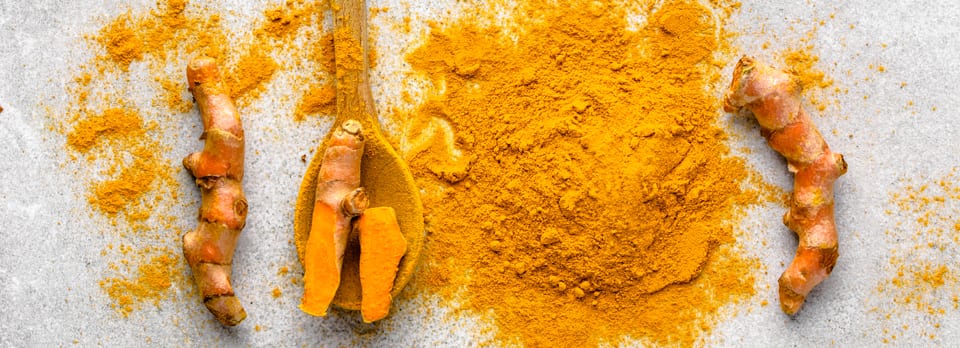
Curcuma longa (turmeric) is cultivated in many places around the world, including South East Asia, where it has been used for thousands of years. Due to its distinctive yellow color in the Hindu religion, it is still used today as a dye for holy robes. Curcuma longa is also cultivated in China, India, Sri Lanka, Java, Australia, West Indies, and Bengal. This magically colored herb also contains some medicinal properties.
REFERENCES
Int J Clin Pract Suppl. 2013 Jan;(178):37-42. DOI: 10.1111/ijcp.12048. Gastrointestinal Safety of NSAIDs and Over-The-Counter Analgesics. I Bjarnason 1
Turmeric: A Herbal and Traditional Medicine. Debjit Bhowmik, Chiranjib1, K. P. Sampath Kumar1, Margret Chandira2, B. Jayakar. Archives of Applied Science Research, 2009, 1 (2) 86-108
Curcuma longa - Turmeric History is Golden
The name “Turmeric” derives from the Latin terra merita “meritorious earth” referring to the color of ground turmeric. Turmeric has a very distinctive yellow color, which resembles a mineral pigment. Curcuma longa has been used for 4,000 years to treat a variety of ailments, including liver disorders, digestive disorders, and was even used to expel worms. It was also used for anemia, poor circulation as well as traditionally used to decrease ‘Kapha’ conditions which resemble excess mucus, allergies, and/or congestion.Turmeric Use in Traditional Medicine
For thousands of years, Turmeric (Curcuma longa) has been used to treat inflammatory disorders, such as mild arthritis. It is interesting to know that both Traditional Chinese medicine and Ayurveda Medicine have used turmeric for inflammatory disorders. This anti-inflammatory property was arrived at by two different groups on two different continents way before information could be easily disseminated through the world. Of course, today, if a researcher published a paper, it would be readily accessible on the internet world-wide and could be downloaded in seconds. The fact that two completely different cultures and countries, separated by physical space and time arrived at the same conclusion that Curcuma longa is a powerful anti-inflammatory is testimony to the power of the herb. These days, modern science has confirmed the traditional findings that turmeric (Curcuma longa) can benefit conditions such as mild arthritis and reducing inflammation.Curcuma longa - The contrast of Traditional Meeting Modern
These days, modern anti-inflammatory drugs (often called Non-steroidal Anti-inflammatory Drugs or NSAIDs) are used in conditions such as arthritis and other inflammatory disorders. These drugs are highly effective for serious arthritic disorders, which is in contrast with Curcuma longa (turmeric), which may be effective for symptomatic, mild arthritis. Interestingly, one of the most common side effects of NSAID drugs is gastrointestinal disorders. In contrast, turmeric has been used traditionally by Hawaiian Ancestors to treat gastrointestinal disorders, which includes ulcers. Thus, one of the ‘side effects’ of using turmeric to treat mild arthritis is treating mild gastrointestinal disorders, which contrasts with the modern anti-inflammatory drugs.REFERENCES
Int J Clin Pract Suppl. 2013 Jan;(178):37-42. DOI: 10.1111/ijcp.12048. Gastrointestinal Safety of NSAIDs and Over-The-Counter Analgesics. I Bjarnason 1
Turmeric: A Herbal and Traditional Medicine. Debjit Bhowmik, Chiranjib1, K. P. Sampath Kumar1, Margret Chandira2, B. Jayakar. Archives of Applied Science Research, 2009, 1 (2) 86-108